China's GB/T 47494 and 47495 take effect in November: prepare the evidence now
Do not wait for final inspection to reconcile the standards. Establish the adoption basis, freeze the assessed configuration, and connect requirements, test methods, supplier records, FAT/SAT and change control.
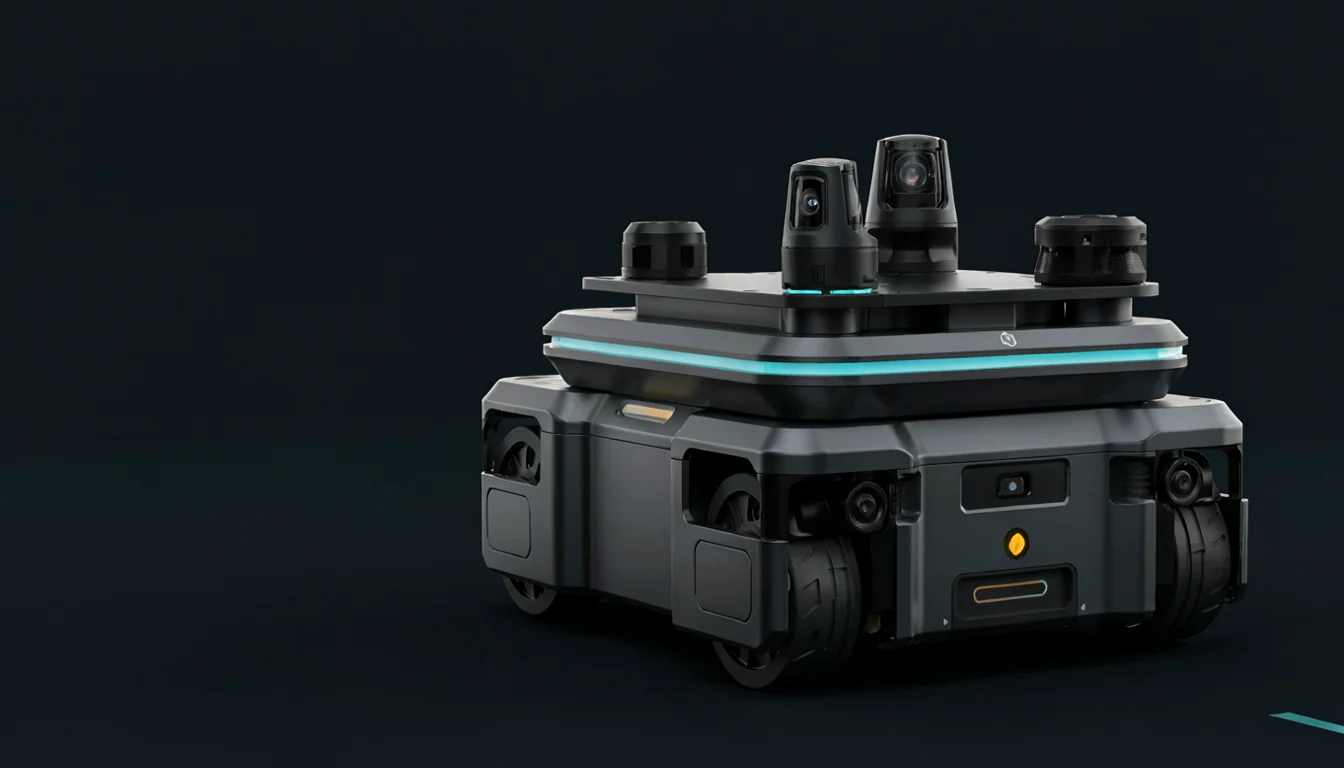
The short answer: teams buying, integrating or delivering logistics robots for projects in China should not wait until 1 November 2026 to assemble a report package. Establish why the project adopts the standards, which exact robot configuration is assessed, how each requirement maps to a test method, and which raw evidence belongs to the supplier, integrator and user. A standard number in a specification does not by itself align product, test and site boundaries.
What is confirmed: a requirements standard paired with a test-method standard
China's official national-standards portal lists GB/T 47494-2026, Logistics robots—Requirements for electrical safety, and GB/T 47495-2026, Logistics robots—Test methods for electrical safety. Both were published on 30 April 2026 and take effect on 1 November 2026. Both carry ICS 25.040.30 and CCS J28 classifications. The portal classifies the first as a recommended national safety standard and the second as a recommended national method standard.
“Recommended” should not be rewritten as automatic mandatory certification for every project. Chinese market-regulation guidance states that the country encourages adoption of recommended standards. A project still needs a documented applicability decision based on relevant law, tender or purchase specifications, contracts, enterprise declarations and customer requirements. This article is an engineering preparation framework, not a legal determination, substitute for the official texts or laboratory opinion.
A six-part implementation-preparation matrix
| Workstream | Question to answer now | Minimum evidence | Owner interface |
|---|---|---|---|
| Applicability | Which product, project, contract or market rule adopts which edition? | Decision, basis, product scope, exclusions and approver | Standards, procurement, project lead |
| Configuration baseline | Does the assessed unit represent delivery? | Model, options, battery/charging, drive, controller, harness, firmware and software | Product, supplier, configuration control |
| Requirement trace | What design and record answer each final requirement? | Clause–risk–design–evidence matrix, including justified N/A items | Electrical, mechanical, controls and safety leads |
| Test readiness | Are method, sample state and acceptance rule aligned? | Plan, equipment/calibration, preconditions, raw data and deviation treatment | Laboratory, engineering, quality |
| Project handover | How does product evidence enter FAT, SAT and user information? | Reports, drawings, lists, labels, O&M information and open deviations | Supplier, integrator, user |
| Change control | Which substitutions or updates invalidate evidence? | Triggers, impact assessment, retest scope, approval and prior baseline | Engineering, sourcing, quality, service |
Seven steps from official text to a releasable configuration
- Acquire the released editions.Confirm numbers, status and dates on the official portal, then build the clause list from the released texts. Do not treat a consultation draft, reseller summary or unofficial translation as the final requirement.
- Record the adoption basis.State whether a contract, tender, enterprise standard, customer requirement or other applicable document invokes GB/T 47494/47495. Record the edition and transition milestone; mark unresolved applicability as pending rather than claiming conformity.
- Freeze the assessed configuration.Include the model and the power, energy storage, drive, control, harness, enclosure, charging interfaces, accessories and software/firmware that can affect the electrical-safety evidence. Make differences between the test unit and delivery units visible.
- Build the requirement–test–evidence trace.Link each clause to its design response, test method, decision, raw record and owner. Give a product-based reason and approval for every not-applicable item instead of using a blank cell as an assumed pass.
- Run a readiness gap check.Before formal testing, check document completeness, sample state, equipment and calibration, power and charging configuration, reproducible abnormal conditions and post-test inspection. A pre-check reveals missing preparation; it is not a substitute for the formal report.
- Carry product evidence into project acceptance.After product-level electrical testing, use FAT and SAT to confirm that final chargers, top modules, external interfaces, safeguards, network/fleet interactions, site conditions and maintenance practices have not changed the boundary.
- Define change-driven retest.Assess changes to batteries, chargers, drives, controllers, harnesses, connectors, enclosure materials, firmware or critical suppliers. Repeat only affected evidence, but do not inherit a result merely because the new part number looks similar.
What buyers should request before testing and delivery
- adopted standards, editions, product boundary and configurations not covered;
- a difference list between the assessed unit and production/delivery units;
- controlled lists for critical electrical parts, energy storage, charging, harnesses and interfaces;
- a requirement–test–result trace, not only the report conclusion page;
- laboratory, date, sample state, method, equipment calibration and raw-record index;
- not-applicable items, deviations, limitations, site preconditions and retest rules.
Do not collapse three safety evidence chains into one “pass”
ISO 3691-4:2023 addresses safety requirements and verification for driverless industrial trucks and their systems, and its public scope notes that operating-zone conditions materially affect safe operation. The same scope states that requirements for power sources are not covered. That boundary is instructive: electrical-safety evidence, vehicle/system functional-safety evidence, and site operating-zone/task risk evidence interact, but none substitutes for the others.
China's market regulator has publicly described an industrial-mobile-robot standards architecture spanning fundamentals, components, complete machines, system integration and industry applications. GB/T 47494/47495 should therefore sit in the electrical-safety evidence layer. They should not be used as a blanket replacement for navigation performance, fleet interfaces, mechanical design, functional safety or site application acceptance.
Scope note: this article uses public official pages to confirm the standards' identity, classification, dates and standards-system context. It does not reproduce unverified technical clauses or declare any product compliant, certified or tested. The responsible organization must use the official released texts, applicable rules, contracts and final configuration to determine testing and release.
Frequently asked questions
Is GB/T 47494-2026 a mandatory Chinese national standard?
The official portal classifies it as a recommended national standard, and national policy encourages adoption of recommended standards. Whether a project must apply it depends on relevant rules, contracts, tenders, enterprise declarations and customer requirements—not the effective date alone.
Can an existing electrical-safety report be reused?
Not by assumption. Map its standard edition, assessed configuration, methods, results and limitations to the released standards and final delivery configuration. The responsible party can then decide which evidence remains applicable and what must be repeated.
Should GB/T 47494 and GB/T 47495 be prepared separately?
Control them as separate documents but one evidence chain: each requirement should connect to a method, sample configuration, result and raw record. A requirements checklist or test report alone can lose scope and traceability.
Does passing electrical-safety tests release an AMR for site operation?
No. Vehicle and system safety functions, the operating zone, navigation and traffic, top modules, task interfaces, maintenance and human interaction still require their own application evidence.
Sources
These primary sources support the material facts and engineering boundaries discussed above.
Evaluating robot control, bimanual manipulation or a mobile platform?
Talk to Matrix Dimension →