VDA 5050 3.0: what to verify before integrating a mixed AMR fleet
VDA 5050 3.0 gives freely navigating robots a clearer place in mixed-fleet control. Protocol support alone, however, does not prove safe operation, task compatibility or vehicle interchangeability.
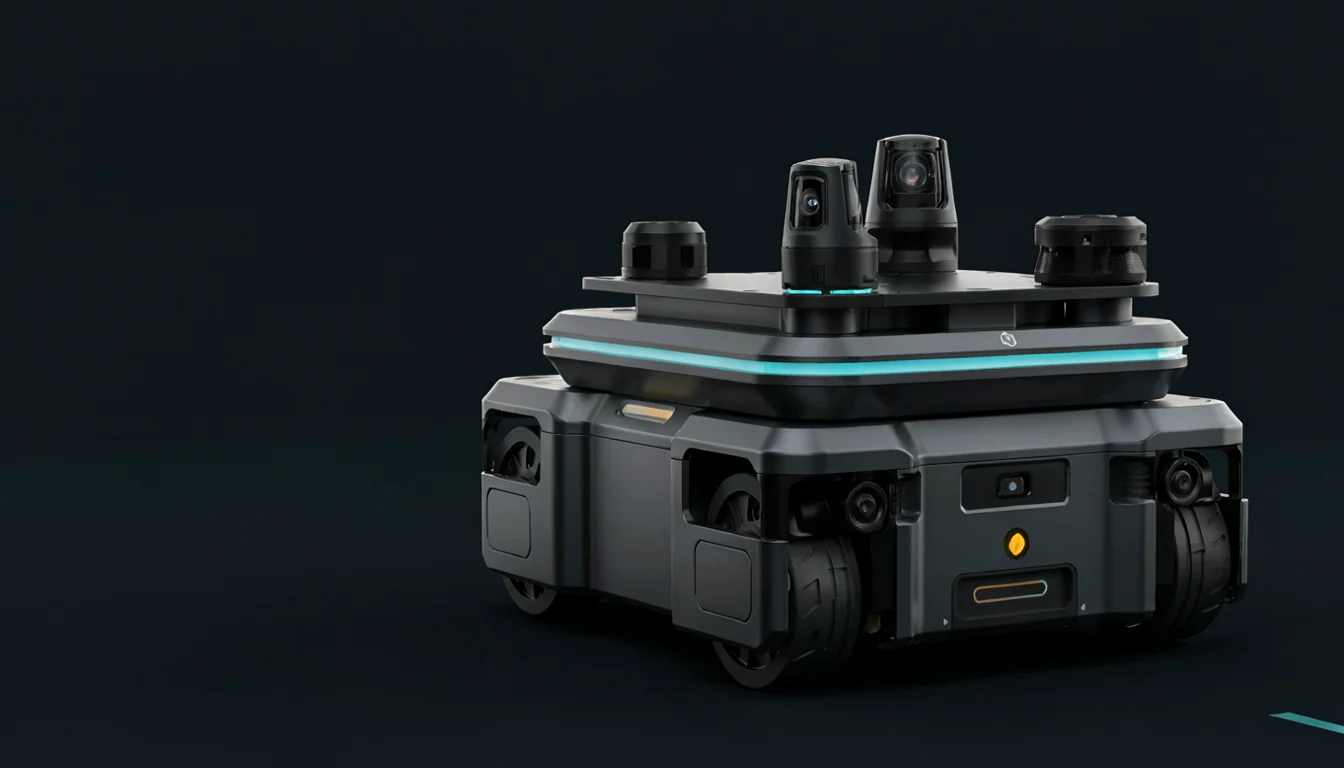
The short answer: use VDA 5050 3.0 as an interface baseline when one master controller must coordinate mobile robots from different vendors or with different navigation models. Do not accept a generic “VDA 5050 compatible” claim. Freeze the version and capability set, then test maps, zones, errors and real task behavior. Treat vehicle and operating-zone safety as a separate acceptance track.
What changed in VDA 5050 3.0?
VDA announced version 3.0 on 20 April 2026; the specification itself is dated March 2026. The interface exchanges order and status data between mobile robots and a central fleet controller. Version 3.0 brings the characteristics of freely navigating robots into the main model: central control can set spatial rules while an autonomous vehicle plans the detailed route between waypoints.
| Version 3.0 capability | Why it matters | Acceptance question |
|---|---|---|
| Zones | Represent blocked, directed, permission-controlled, speed and coordinated-replanning areas | Which zone types does each vehicle implement, and what happens when permission expires? |
| Path sharing | A freely navigating robot can report its planned path for traffic coordination | Do coordinate frames, update timing and replanning ownership match? |
| Map management | Fleet control can coordinate map download, activation, deactivation and deletion | How are map identifiers, versions, rollback and server access handled? |
| Localized errors and standard actions | Human-readable error translations and actions such as power-saving mode improve operations | Can structured error data drive recovery, rather than merely populate a dashboard? |
| Trajectories and corridors retained | Line-guided and obstacle-avoiding vehicles still fit the interface model | Which control boundary applies to each vehicle class? |
Interface compliance is not vehicle interchangeability
The VDA 5050 specification defines messages, states and expected behavior. It does not normalize vehicle geometry, payload, braking, localization, charging, load handling or site process. Two products may both implement 3.0 yet expose different zone types, action parameters and factsheet capabilities. The official material describes 3.0 as a toolkit that can be configured for the autonomy level and project, so procurement must identify the exact common subset.
Communication and safety need separate evidence
ISO 3691-4:2023 specifies safety requirements and verification for driverless industrial trucks and their systems. Its scope explicitly lists AGVs and AMRs, and the ISO abstract notes that operating-zone conditions materially affect safe operation. Successful order, zone and path exchange therefore cannot substitute for vehicle safety functions, preparation of the operating zone or an application risk assessment.
Where loads, doors, lifts, conveyors or a manipulator are involved, define who authorizes motion, the safe state after loss of communication, how manual intervention ends and whether safety-related signals use an independently validated path.
A five-stage mixed-fleet acceptance plan
- Freeze the scope. Record every vehicle and software version, the VDA 5050 version, messages, zones and actions in an agreed capability matrix.
- Test protocol conformance. Validate messages against the official JSON schemas, then exercise sequence numbers, duplicates, reconnects, stale orders, cancellation and pause.
- Test task semantics. Cover pickup and drop-off, charging, map changes, zone permission, blockage and deadlock handling; confirm controller and vehicle interpret every state consistently.
- Inject faults in representative traffic. Add people, temporary obstacles, narrow passages, network impairment and a disabled vehicle. Record who replans, who stops and how recovery works.
- Complete safety acceptance independently. Review the vehicle, load, operating zone, intersections, charging, manual operation and maintenance against applicable requirements.
Matrix Dimension perspective
The following is an engineering inference from the public specification: the useful shift in 3.0 is not a single navigation method for every AMR. It is a more explicit contract between central constraints and onboard autonomy. Teams evaluating an AMR mobile platform or mobile manipulation system should first prove one representative route and one payload workflow as a minimum interoperable loop, then decide whether to add vehicle types. For the related boundary between planning and deterministic execution, see our AI planning and real-time control guide.
Scope: This article interprets public VDA material, the official specification repository and the ISO standard page. It does not claim that a Matrix Dimension AMR is certified, has completed VDA 5050 3.0 conformance testing or supports every optional feature described here. Released data sheets and project tests remain authoritative.
Frequently asked questions
Is VDA 5050 3.0 a mandatory safety standard?
No. It is a communication-interface recommendation between mobile robots and master control. Vehicle and system safety still require separate engineering and verification against applicable law, ISO 3691-4 and the site risk assessment.
Can AMRs from different vendors work together as soon as both support VDA 5050?
Not on that statement alone. Compare the exact version, optional messages, zones, actions, maps and error semantics, then test an agreed set of normal and fault scenarios.
Does version 3.0 exclude existing line-guided AGVs?
No. VDA states that predefined trajectories and obstacle-avoidance corridors remain in version 3.0, while zones and path sharing extend support for freely navigating vehicles.
Sources
These primary sources support the material facts and engineering boundaries discussed above.
Evaluating robot control, bimanual manipulation or a mobile platform?
Talk to Matrix Dimension →